














Whitepaper: Choosing the right pressure transducer

Getting Exactly The Right Pressure Transducer Is Getting Easier....


- David Almond of Pressure Vacuum Level Ltd explains 

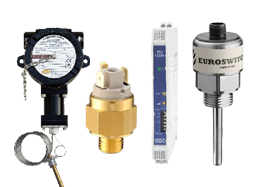
The latest pressure transducer/transmitter technologies are making it easier, faster and less complicated to buy pressure transducers that are right for the task you have in mind. Significant advances have been made in areas such as heat dissipation, reduced creep and hysteresis effects and temperature compensation, all of which have helped to make today’s pressure transmitters more accurate and more reliable than the ones that were on the market a decade or so ago. Perhaps the biggest advance from the standpoint of a customer who wants a pressure transmitter in a hurry is the fact that the latest types can be programmed by the supplier before despatch to exactly the specification required.

But let’s look a little more at what you should bear in mind when buying a pressure transmitter. First, know precisely what pressure fitting your transmitter must fit – they may sound alarmingly obvious, but you would be amazed at how many prospective purchasers do not actually know at the outset whether they need a transmitter to fit a tapered thread or a straight thread, and whether it needs to have an internal or external fitting.

The essential function of a pressure transducer/transmitter is to convert a fluid pressure – liquid or gas – into a proportionate electrical signal that can be transmitted from the pressure site to either a central or a remote control or monitoring system, usually a production control system or a data logger. Pressure transducers come in a wide range of outputs, typically 3mV/V or 30 millivolts at 10VDC at the low end and 5VDC or 10VDC at an input voltage of 24 to 32 VDC and 4-20 mA at a 12-36VDC input. An analogue to digital (A/D) converter is used turn the analogue quantities into digital data.

Get the pressure range right

Any pressure transducer that you purchase will be designed or calibrated to provide a specific electrical output for a specified pressure range. Typically, transducers are supplied in a number of pressure ranges from 0-5psi up to 0-100,000 psi rated pressure. Some suppliers can supply some or all of the ranges in either high-level or low-level electrical outputs.

It is wise, when specifying a pressure transducer, to select a pressure range such that operating pressure is approximately 80% of full scale. You also need to select an electrical output that is appropriate to your system’s needs, bearing in mind the issues of voltage drop and resistance in long cable runs. If transducer cable runs are more than 30 metres (100 feet), think about a high-level unit if the environment, and your system, are intolerant of low-level signals. Your supplier’s engineers should be able to advise you.

Check what sort of connections are available

All pressure transducers require both a mechanical pressure connection and an electrical connection. Pressure connections are usually made of stainless steel and designed to be leak-free within the operating range of the transmitter.

The electrical connection is usually a multi-pin connector or a cable. The connector usually has six pins for compatibility with 6-conductor cable assemblies that carry signals from the transmitter to the instrumentation that interprets the signal. Make sure that whatever pressure transducer you buy uses the same wiring code for electrical pin-to-pin compatibility. And make sure that whoever installs it does not, in even the smallest way, damage the connector. A bent pin can wreck the whole enterprise.

Hostile environments and noise

It is essential to consider the chemical nature of the fluid whose pressure the transmitter is to transmit. The pressure-sensing end of most transmitters is made of hardened stainless steel and the outer shell is usually also of stainless steel. Corrosion of a pressure transmitter’s diaphragm can reduce its output sensitivity and make its transmitted data inaccurate, so it makes sense to discuss the nature of the application with the transmitter supplier’s engineering team.

The validity of a transmitter’s output can also be affected significantly by electrical noise. Electro-magnetic fields. Electric motors, power lines, transformers and many other devices generate electro-magnetic fields that can be picked up inductively (EMI/RFI), and this can induce signal errors. Capacitance between individual conductors can be a problem, and this increases with the length of the cables. To eliminate these harmful signals, you need to use shielded cable and to earth (ground) only one end of the shield. Earthing both ends would make the shield into a signal conductor, capacitatively coupled to the measured signal. The difference in potential between multiple earthing points can cause circulating currents that become a further source of noise.

The usual method of cancelling out the noise caused by inductive pick-up is using twisted pairs. Where a low signal level cable has to be close to high voltage cable, the low-level cable can be effectively screened by a metal conduit.

Getting it right – and getting it tomorrow

The traditional problem with getting pressure transmitters in a hurry has always been the huge range of pressure and input specifications that the supplier has to stock to make same-day despatch possible. Buyers frequently get told that there will be a delay before despatch. Fortunately, the latest technology has made it possible for pressure transmitters to be programmed to the customer’s exact needs before they are sent to the customer. My company, Pressure Vacuum Level Ltd (www.pvl.co.uk) is the sole UK distributor for a major US manufacturer of pressure transmitters and we have the programming technology at our headquarters in Sussex. If you need a top-quality pressure transmitter in a hurry, phone the PVL engineering team on 01892 664499 and explain your requirements and the detailed specification. In most cases, the team will be able to programme the pressure transmitter that you need and despatch it on the same day. Now that really is a solution.